More Than Pads. We Build Futures.
At Brook of Hope Home, we believe that no student should have to choose between education and dignity. Yet for many vulnerable girls in Zambia, period poverty creates exactly that choice.
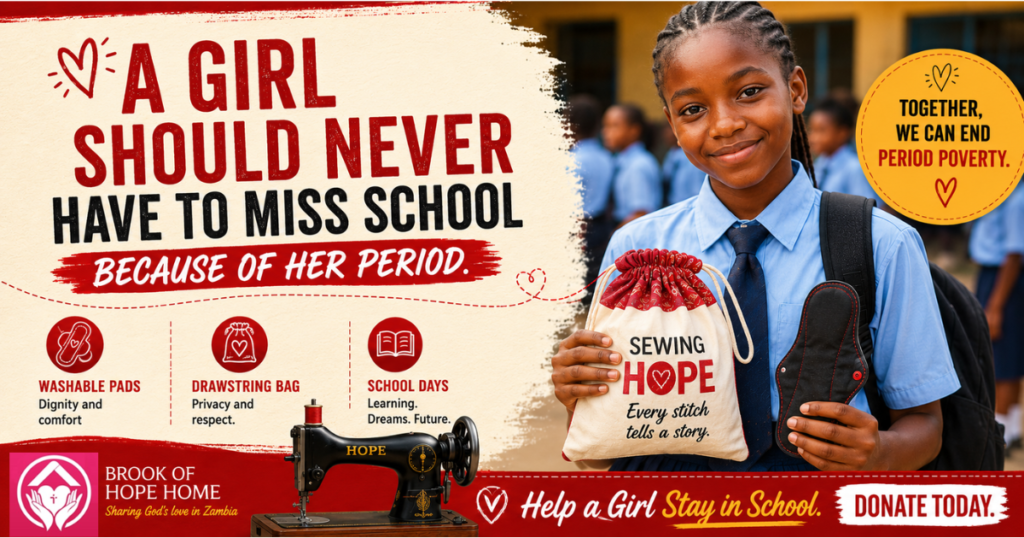
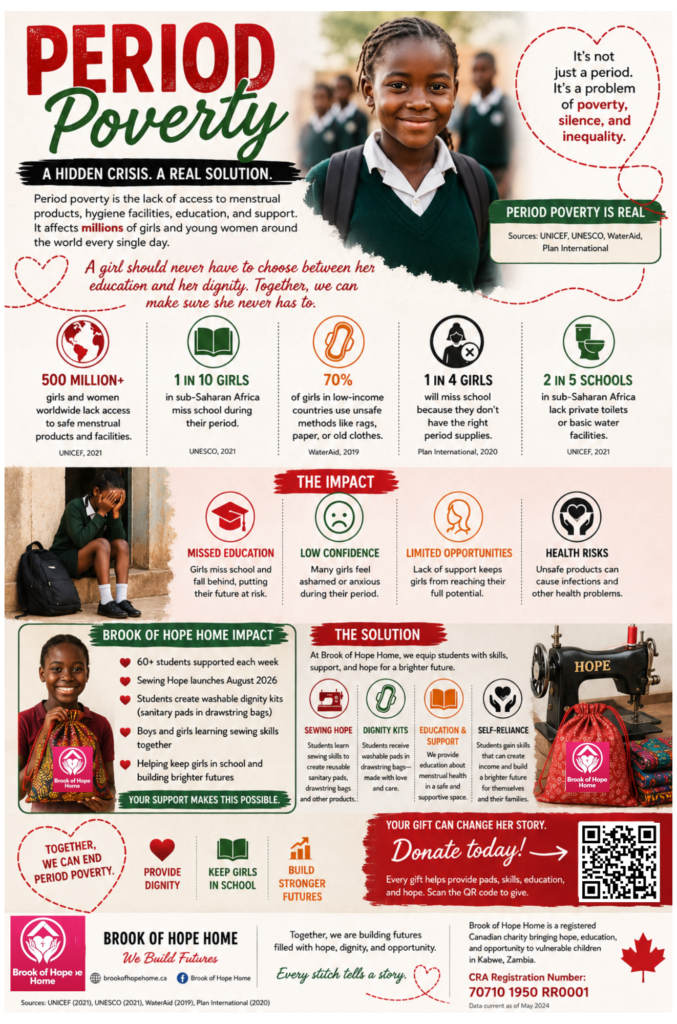
Period poverty is the lack of access to menstrual products, menstrual health education, suitable sanitation facilities and dependable support. When girls do not have the supplies they need to manage their periods safely and confidently, they may miss several days of school each month. Over time, those missed days can affect their learning, confidence and future opportunities.
Sewing Hope is Brook of Hope Home’s practical and compassionate response.
Launching in mid-August 2026, this new program will provide older students—both boys and girls—with hands-on training in sewing, tailoring, entrepreneurship and practical life skills. One sewing machine has been generously donated to Brook of Hope Home through Tools With A Mission. Through donations to the Sewing Hope campaign, we hope to purchase a second machine so that more students can participate and gain practical experience.
A local tailor or seamstress will be hired to teach and supervise the students as they learn the foundations of sewing. Menstrual health education will be taught by a nurse, ensuring that the female students receive clear, accurate and age-appropriate information about caring for their health and managing their periods safely and confidently.
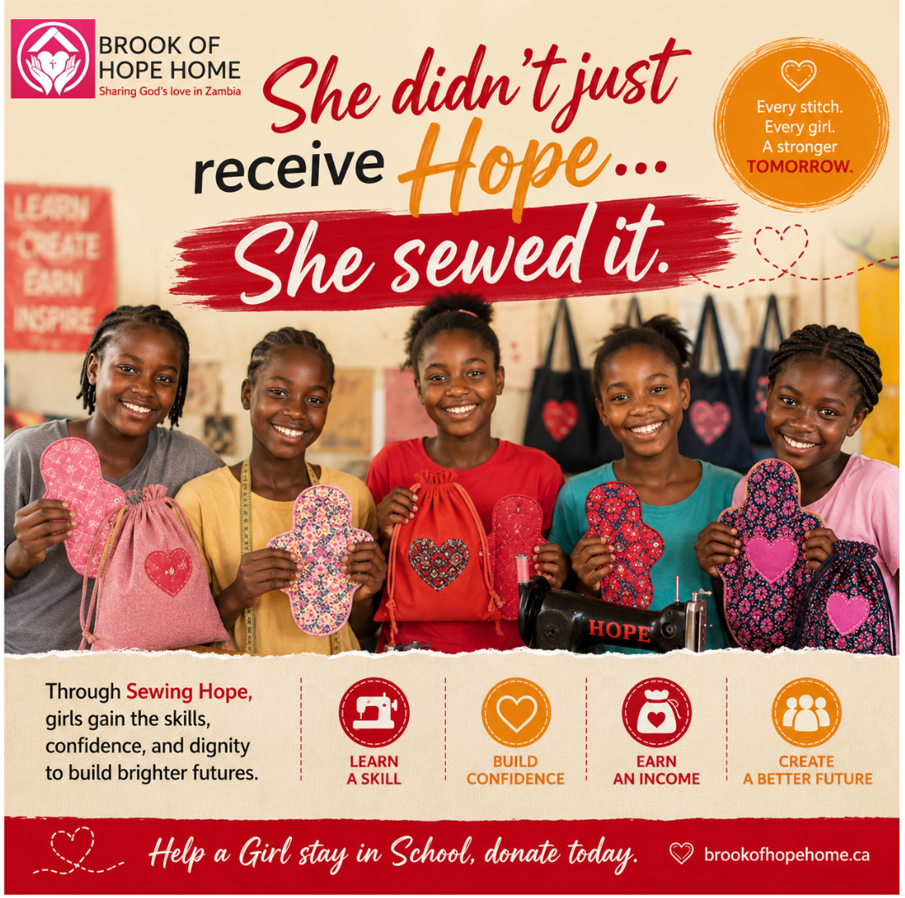
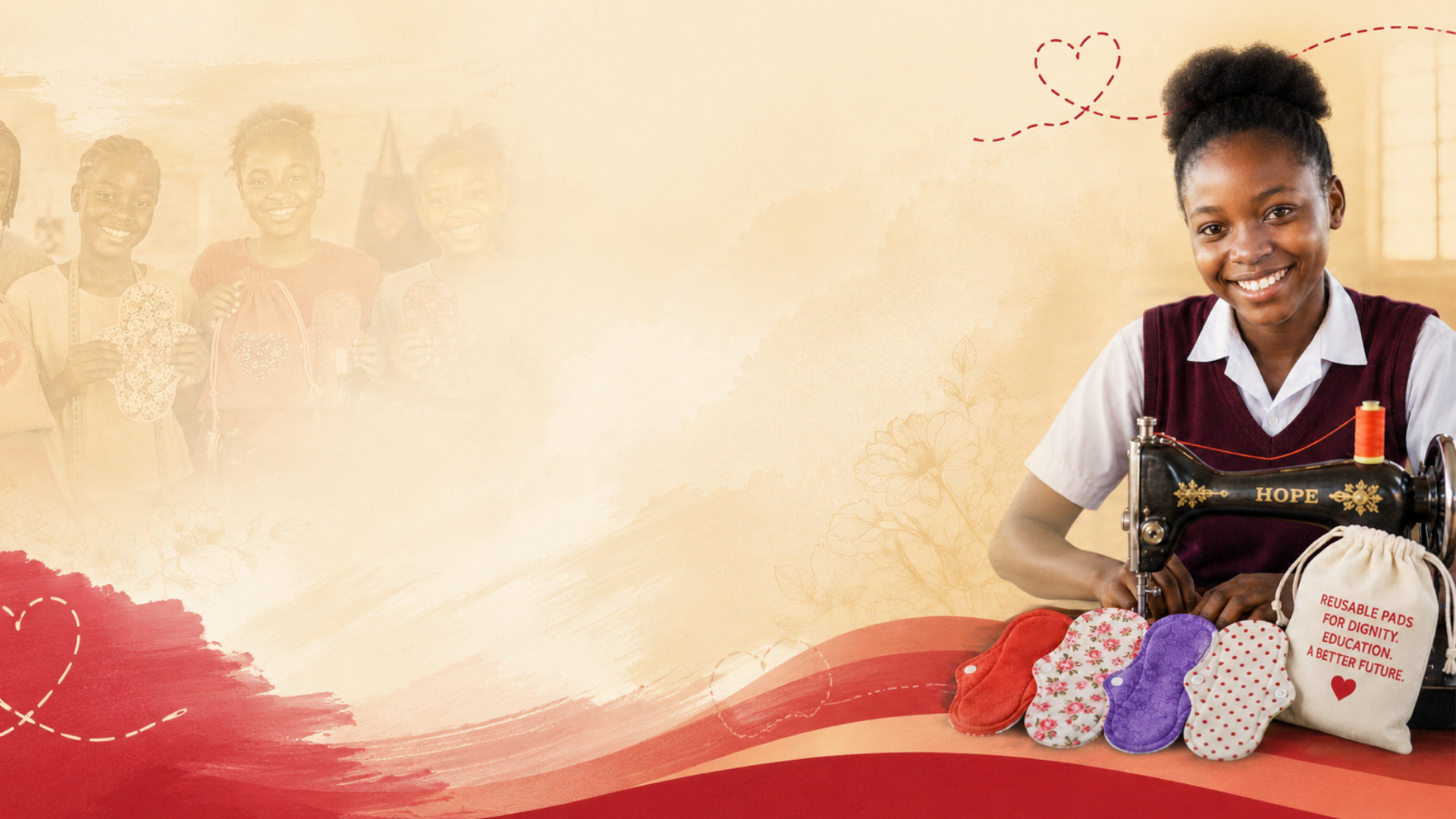
The students’ first project will be making reusable menstrual pad kits for the female students at Brook of Hope Home. Each student will receive a kit containing ten washable sanitary pads, a handmade drawstring storage bag and menstrual health education. These kits will be provided free of charge, helping our students attend school with greater confidence, comfort and dignity.
Whenever suitable, the fabric used for the pads will come from gently used cotton clothing purchased in local markets and carefully prepared for reuse. Other locally purchased materials will also be used as appropriate. This approach will help keep costs manageable while teaching students the importance of recycling, reducing waste and creatively giving existing materials a new purpose.
Reusable cotton fabrics can also be combined to create colourful, patchwork-style bags. In this way, fabric that might otherwise be discarded can be transformed into something practical, attractive and valuable. The program will encourage students to see possibilities in the resources around them and learn how creativity and responsible stewardship can work together.
Reusable pads offer more than a temporary solution. They can be washed and used many times, reducing the ongoing financial burden of purchasing disposable menstrual products. At the same time, making the kits gives participating students an accessible first sewing project through which they develop a strong sense of accomplishment and can learn to measure, cut fabric, operate a sewing machine and complete something useful with their own hands.
But Sewing Hope is about much more than pads.
As their skills and confidence grow, students will progress to making patchwork bags, fabric purses and other useful items. They will also learn to complete clothing repairs, alterations and eventually sew school uniforms and trousers. Some handmade bags may be sold in Zambia while others brought to Canada for fundraising, helping to support the continued development of the program.
In time, students who demonstrate ability and commitment may be able to use these skills to earn an income, establish a small business or pursue further training in tailoring. Sewing Hope therefore offers both an immediate response to period poverty and a long-term investment in young people.
Boys and girls will learn together, gaining patience, responsibility, creativity, teamwork and pride in producing something of value. The program addresses a pressing need today while equipping students with knowledge and skills they can carry into adulthood.
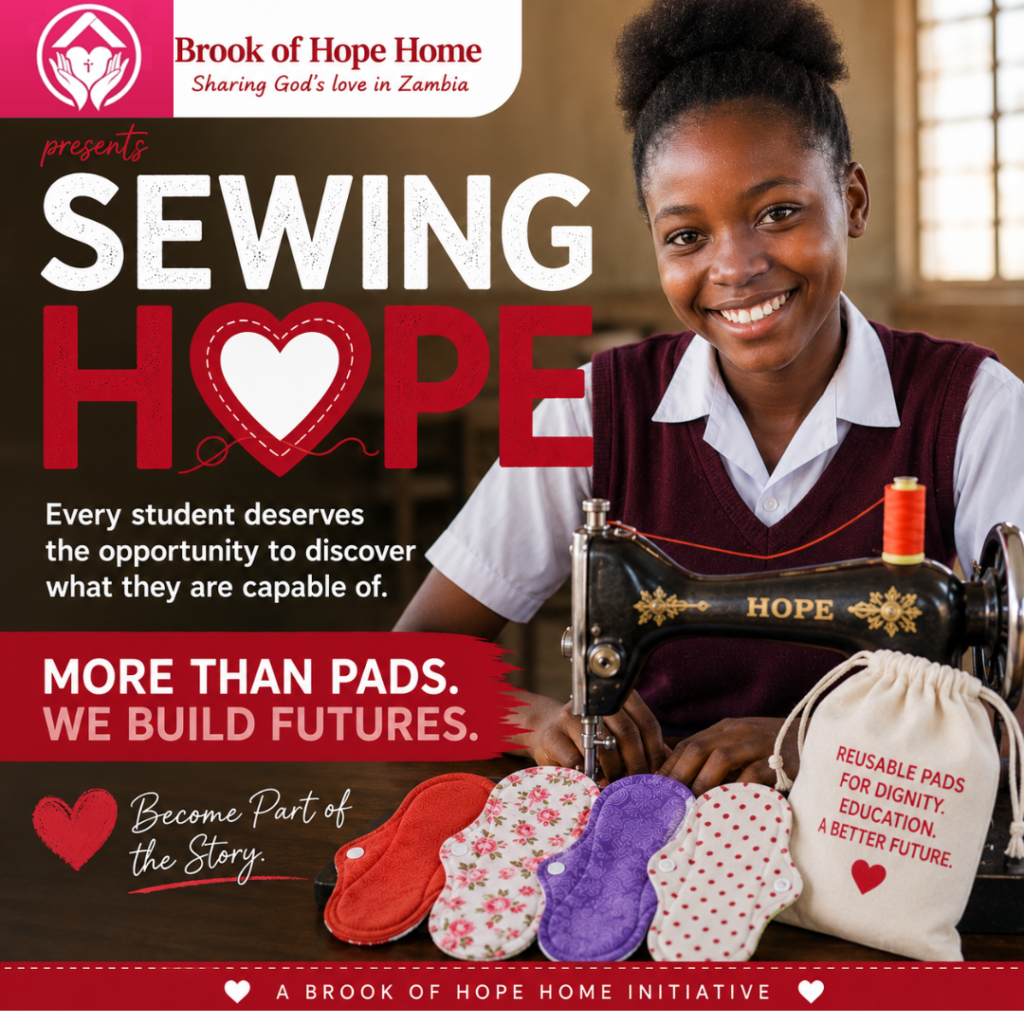
Donations to Sewing Hope will help Brook of Hope Home purchase a second sewing machine, tables to work on and provide suitable cotton fabrics, absorbent and waterproof materials, thread, needles, snaps and fasteners, scissors, measuring tools, machine maintenance and professional instruction. Donations will also help cover the nurse-led health education that is an important part of each menstrual pad kit.
The sewing machines will be stored securely in a locked classroom and used only during supervised training and approved sewing times.
Through Sewing Hope, used fabric can be given a new purpose. A piece of cotton can become a reusable pad. Scraps of colourful material can become a beautiful patchwork bag. A sewing lesson can become a source of confidence. And a practical skill can become an opportunity for future income.
Every stitch tells a story—a story of dignity, creativity, opportunity and hope.
Together, we can help students stay in school, develop valuable skills, care for their environment and build brighter futures.
The next story begins with you.